 Image 1 of 1
“Winter Scene” — Carl Hilgers
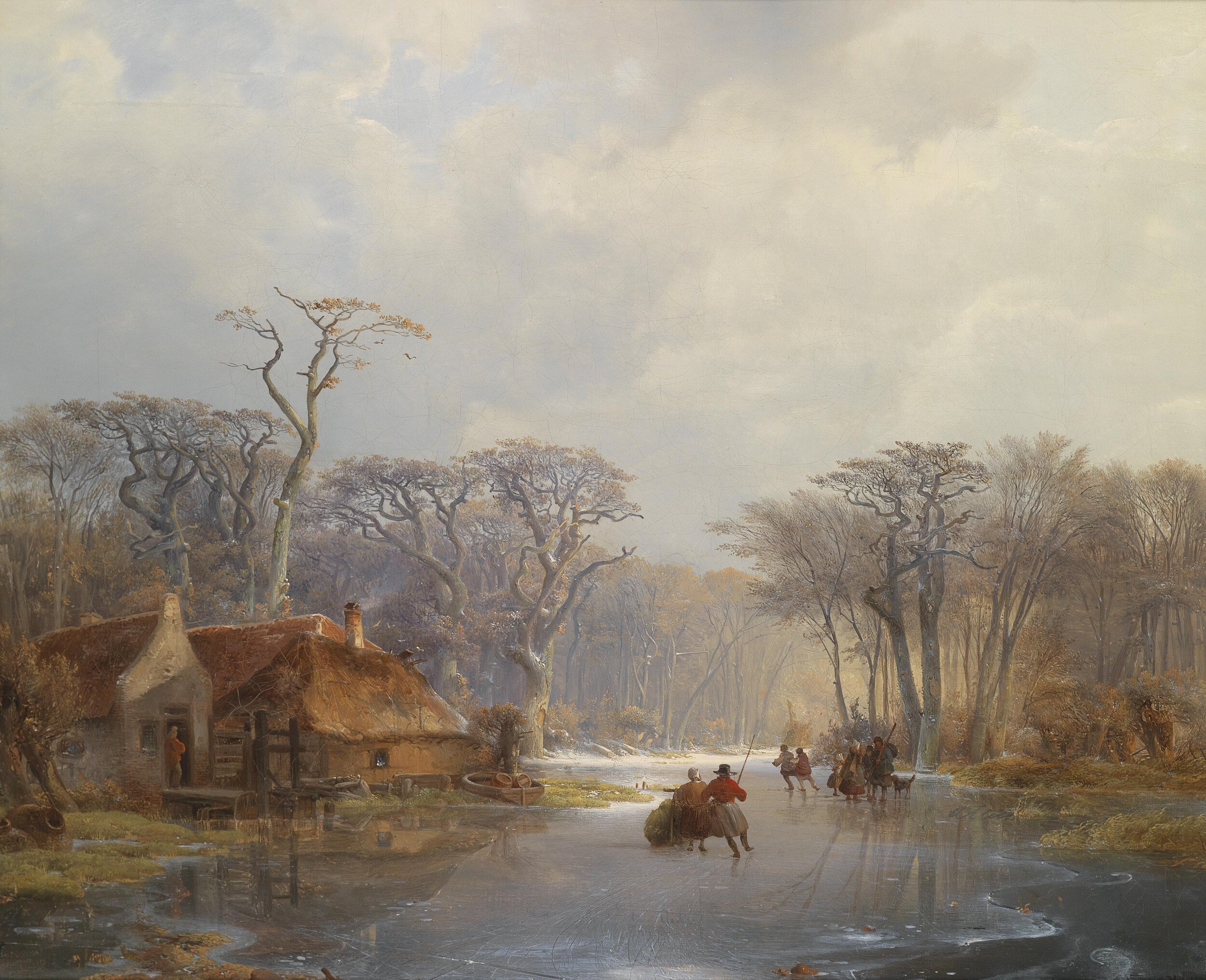
“Winter Scene” presents a frozen canal through pale winter light, quiet water, and the activity of people moving across the ice. Rather than treating winter as empty or severe, the painting gives the season a gentle social warmth, where skating figures and clustered groups make the landscape feel lived in rather than still.
The composition balances stillness with movement. A cottage and winter trees frame the left side of the scene, while figures gather and skate across the ice deeper into the view. Reflections, thawing edges, and the pale sky soften the setting, so that the painting feels less like a spectacle of winter than a quiet inhabited landscape. The mood comes not from drama, but from the way cold air, muted color, and daily life are held together in one calm surface.
Hilgers often treated winter as an inhabited season, filling frozen canals and quiet waterways with skaters, small gatherings, and a sense of everyday warmth. In a work like this, the frozen canal becomes both a landscape and a social space, allowing winter to feel communal rather than empty.
Expressed on silk and paired with integrated illumination, the artwork takes on a different presence from traditional surfaces. The translucency of silk allows light to pass through the image, introducing a sense of depth and softness that changes with its surroundings. Rather than remaining a fixed image, the piece responds to light and its environment, shifting in presence throughout the day. Appearing quiet and refined in natural light, it becomes softly luminous as light grows more prominent.
“Winter Scene” — Carl Hilgers
“Winter Scene” presents a frozen canal through pale winter light, quiet water, and the activity of people moving across the ice. Rather than treating winter as empty or severe, the painting gives the season a gentle social warmth, where skating figures and clustered groups make the landscape feel lived in rather than still.
The composition balances stillness with movement. A cottage and winter trees frame the left side of the scene, while figures gather and skate across the ice deeper into the view. Reflections, thawing edges, and the pale sky soften the setting, so that the painting feels less like a spectacle of winter than a quiet inhabited landscape. The mood comes not from drama, but from the way cold air, muted color, and daily life are held together in one calm surface.
Hilgers often treated winter as an inhabited season, filling frozen canals and quiet waterways with skaters, small gatherings, and a sense of everyday warmth. In a work like this, the frozen canal becomes both a landscape and a social space, allowing winter to feel communal rather than empty.
Expressed on silk and paired with integrated illumination, the artwork takes on a different presence from traditional surfaces. The translucency of silk allows light to pass through the image, introducing a sense of depth and softness that changes with its surroundings. Rather than remaining a fixed image, the piece responds to light and its environment, shifting in presence throughout the day. Appearing quiet and refined in natural light, it becomes softly luminous as light grows more prominent.