 Image 1 of 1
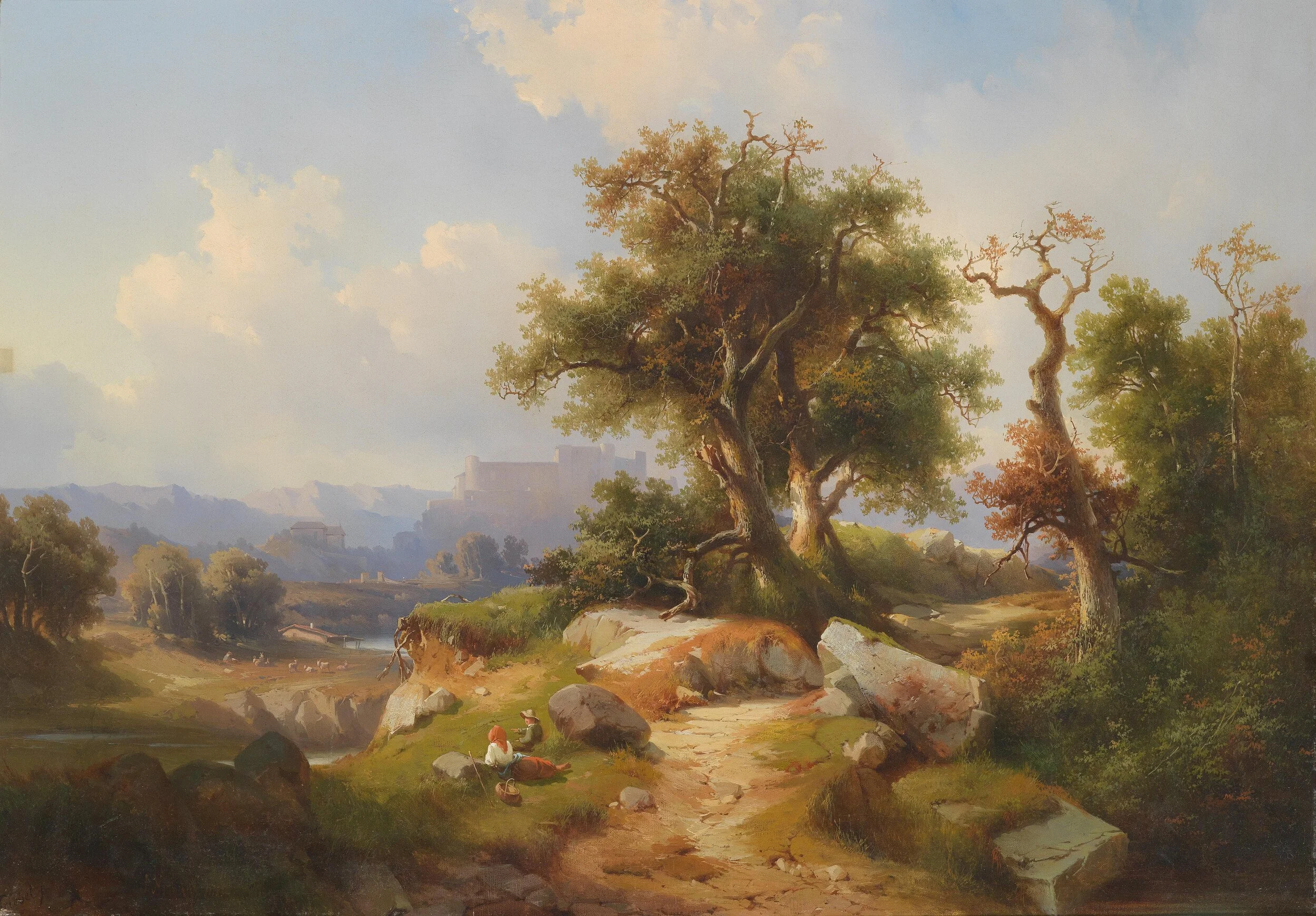
View of Hohensalzburg Fortress— Carl Triebel
In "View of Hohensalzburg Fortress", Carl Triebel places the fortress within a broader landscape of trees, water, stone, and open sky. The ruined walls rise from the middle ground, but the scene is not purely architectural; it is shaped just as much by the surrounding terrain and by the travelers pausing in the foreground. This gives the work a balanced atmosphere, where built form and natural setting feel inseparable.
Triebel was a German painter active in the nineteenth century, known for landscape and regional views. That makes this composition especially characteristic, combining a recognizable landmark with the softer rhythms of its environment.
Expressed on silk and paired with integrated illumination, the artwork takes on a different presence from traditional surfaces. The translucency of silk allows light to pass through the image, introducing a sense of depth and softness that changes with its surroundings. Rather than remaining a fixed image, the piece responds to light and its environment, shifting in presence throughout the day. Appearing quiet and refined in natural light, it becomes softly luminous as light grows more prominent.
View of Hohensalzburg Fortress— Carl Triebel
In "View of Hohensalzburg Fortress", Carl Triebel places the fortress within a broader landscape of trees, water, stone, and open sky. The ruined walls rise from the middle ground, but the scene is not purely architectural; it is shaped just as much by the surrounding terrain and by the travelers pausing in the foreground. This gives the work a balanced atmosphere, where built form and natural setting feel inseparable.
Triebel was a German painter active in the nineteenth century, known for landscape and regional views. That makes this composition especially characteristic, combining a recognizable landmark with the softer rhythms of its environment.
Expressed on silk and paired with integrated illumination, the artwork takes on a different presence from traditional surfaces. The translucency of silk allows light to pass through the image, introducing a sense of depth and softness that changes with its surroundings. Rather than remaining a fixed image, the piece responds to light and its environment, shifting in presence throughout the day. Appearing quiet and refined in natural light, it becomes softly luminous as light grows more prominent.