 Image 1 of 1
“Vesuvius in Eruption” — Joseph Mallord William Turner
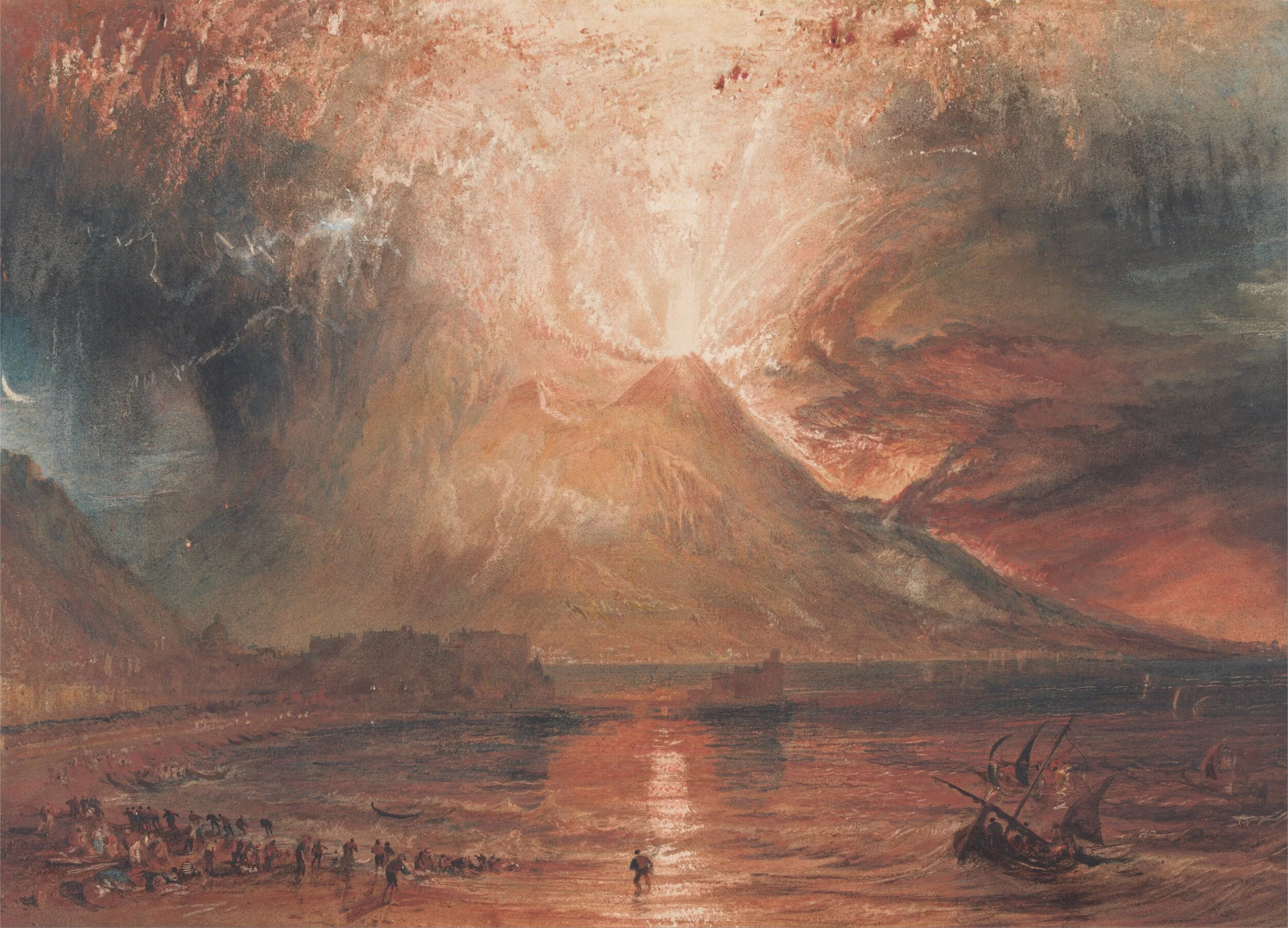
“Vesuvius in Eruption” presents Mount Vesuvius at the height of volcanic force, with fire, smoke, and glowing ash filling the sky above the bay. The volcano rises at the center of the scene, sending light upward into dark clouds while red heat spreads across the mountain and water. Below, small boats and figures along the shore create a human scale against the vast natural spectacle.
The scene moves from the crowded shoreline and boats at the bottom toward the dark water and burning reflection at the center. Above it, the mountain becomes the source of both light and danger, surrounded by sweeping clouds of smoke and fiery color. The contrast between the small human figures and the erupting volcano gives the image its dramatic force.
Turner returned often to subjects of weather, fire, sea, and natural power, and volcanic eruption offered him a way to bring those interests together. Although he later visited Naples and climbed Vesuvius, this dramatic composition was likely shaped by imagination and earlier visual traditions rather than direct experience of an eruption.
Expressed on silk and paired with integrated illumination, the artwork takes on a different presence from traditional surfaces. The translucency of silk allows light to pass through the image, introducing a sense of depth and softness that changes with its surroundings. Rather than remaining a fixed image, the piece responds to light and its environment, shifting in presence throughout the day. Appearing quiet and refined in natural light, it becomes softly luminous as light grows more prominent.
“Vesuvius in Eruption” — Joseph Mallord William Turner
“Vesuvius in Eruption” presents Mount Vesuvius at the height of volcanic force, with fire, smoke, and glowing ash filling the sky above the bay. The volcano rises at the center of the scene, sending light upward into dark clouds while red heat spreads across the mountain and water. Below, small boats and figures along the shore create a human scale against the vast natural spectacle.
The scene moves from the crowded shoreline and boats at the bottom toward the dark water and burning reflection at the center. Above it, the mountain becomes the source of both light and danger, surrounded by sweeping clouds of smoke and fiery color. The contrast between the small human figures and the erupting volcano gives the image its dramatic force.
Turner returned often to subjects of weather, fire, sea, and natural power, and volcanic eruption offered him a way to bring those interests together. Although he later visited Naples and climbed Vesuvius, this dramatic composition was likely shaped by imagination and earlier visual traditions rather than direct experience of an eruption.
Expressed on silk and paired with integrated illumination, the artwork takes on a different presence from traditional surfaces. The translucency of silk allows light to pass through the image, introducing a sense of depth and softness that changes with its surroundings. Rather than remaining a fixed image, the piece responds to light and its environment, shifting in presence throughout the day. Appearing quiet and refined in natural light, it becomes softly luminous as light grows more prominent.