 Image 1 of 1
“The Rocky Mountains, Lander’s Peak” — Albert Bierstadt
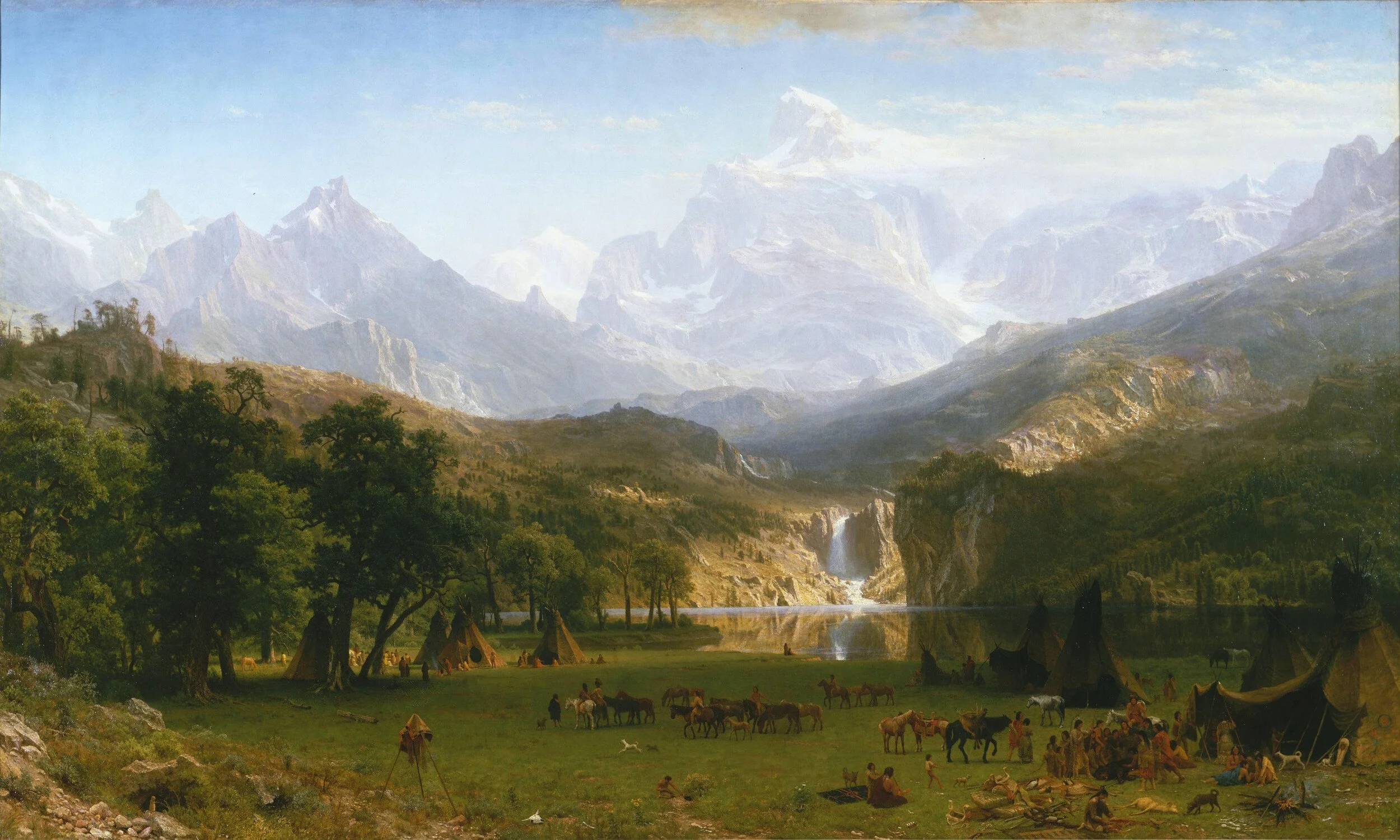
“The Rocky Mountains, Lander’s Peak” presents the American West as a vast, luminous landscape of mountains, water, forest, and human life. Snow-covered peaks rise in the distance above a wide valley, while the foreground is filled with figures, horses, tents, and daily activity. The painting combines grandeur with detail, creating a scene that feels both monumental and carefully observed.
The composition moves from the shaded foreground into a bright central lake and waterfall, then upward toward the pale mountains beyond. Trees frame the lower left, tents and figures gather across the lower right, and the waterfall creates a visual path into the center of the landscape. Light opens across the valley in layers, giving the mountains a distant, almost radiant presence while keeping the foreground grounded in human scale.
Albert Bierstadt became known for large, panoramic views of the American West, often combining direct observation from travel with a heightened sense of scale and drama. This painting grew out of his first trip west and became one of his major works, presenting the Rocky Mountains as both a specific place and an image of vast natural spectacle.
Expressed on silk and paired with integrated illumination, the artwork takes on a different presence from traditional surfaces. The translucency of silk allows light to pass through the image, introducing a sense of depth and softness that changes with its surroundings. Rather than remaining a fixed image, the piece responds to light and its environment, shifting in presence throughout the day. Appearing quiet and refined in natural light, it becomes softly luminous as light grows more prominent.
“The Rocky Mountains, Lander’s Peak” — Albert Bierstadt
“The Rocky Mountains, Lander’s Peak” presents the American West as a vast, luminous landscape of mountains, water, forest, and human life. Snow-covered peaks rise in the distance above a wide valley, while the foreground is filled with figures, horses, tents, and daily activity. The painting combines grandeur with detail, creating a scene that feels both monumental and carefully observed.
The composition moves from the shaded foreground into a bright central lake and waterfall, then upward toward the pale mountains beyond. Trees frame the lower left, tents and figures gather across the lower right, and the waterfall creates a visual path into the center of the landscape. Light opens across the valley in layers, giving the mountains a distant, almost radiant presence while keeping the foreground grounded in human scale.
Albert Bierstadt became known for large, panoramic views of the American West, often combining direct observation from travel with a heightened sense of scale and drama. This painting grew out of his first trip west and became one of his major works, presenting the Rocky Mountains as both a specific place and an image of vast natural spectacle.
Expressed on silk and paired with integrated illumination, the artwork takes on a different presence from traditional surfaces. The translucency of silk allows light to pass through the image, introducing a sense of depth and softness that changes with its surroundings. Rather than remaining a fixed image, the piece responds to light and its environment, shifting in presence throughout the day. Appearing quiet and refined in natural light, it becomes softly luminous as light grows more prominent.