 Image 1 of 1
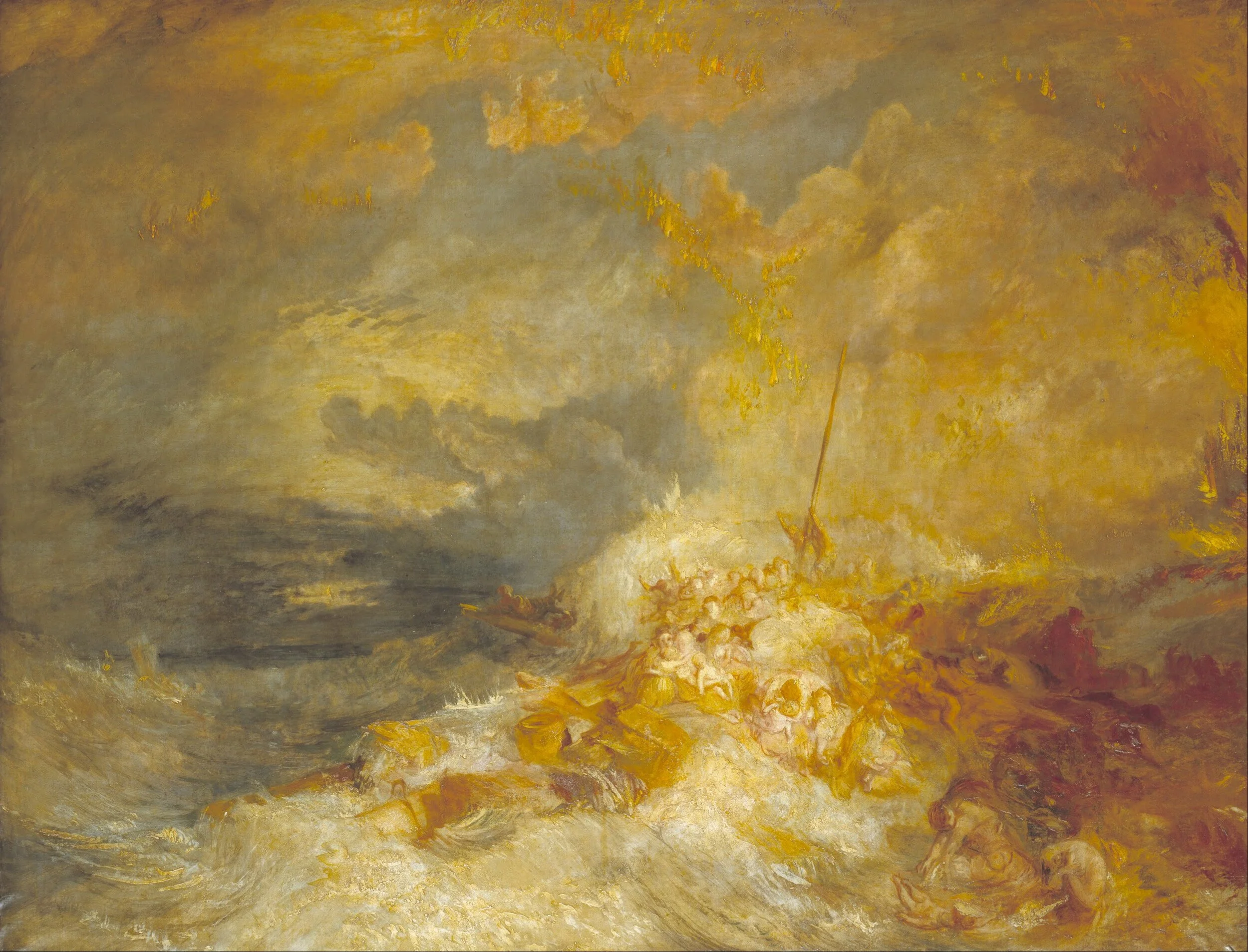
“Disaster at Sea” — Joseph Mallord William Turner
“Disaster at Sea” is one of Turner’s most forceful visions of maritime catastrophe. Rather than describing a single clear event, the painting throws the viewer into a world of surf, smoke, and chaos, where forms seem to emerge and disappear inside the violence of the sea. Though likely unfinished, it remains one of his most powerful artworks.
The composition is turbulent and unstable. Waves, spray, and light collide across the canvas, while figures and fragments of vessels appear caught in the motion of the storm. Turner does not organize the scene around calm observation. Instead, he pushes it toward raw sensation, allowing the disaster to be felt before it is fully understood.
Sea paintings remained one of Turner’s most important subjects throughout his career. In works like this, his handling of color and atmosphere becomes almost overwhelming, turning the sea into both subject and force.
Expressed on silk and paired with integrated illumination, the artwork takes on a different presence from traditional surfaces. The translucency of silk allows light to pass through the image, introducing a sense of depth and softness that changes with its surroundings. Rather than remaining a fixed image, the piece responds to light and its environment, shifting in presence throughout the day. Appearing quiet and refined in natural light, it becomes softly luminous as light grows more prominent.
“Disaster at Sea” — Joseph Mallord William Turner
“Disaster at Sea” is one of Turner’s most forceful visions of maritime catastrophe. Rather than describing a single clear event, the painting throws the viewer into a world of surf, smoke, and chaos, where forms seem to emerge and disappear inside the violence of the sea. Though likely unfinished, it remains one of his most powerful artworks.
The composition is turbulent and unstable. Waves, spray, and light collide across the canvas, while figures and fragments of vessels appear caught in the motion of the storm. Turner does not organize the scene around calm observation. Instead, he pushes it toward raw sensation, allowing the disaster to be felt before it is fully understood.
Sea paintings remained one of Turner’s most important subjects throughout his career. In works like this, his handling of color and atmosphere becomes almost overwhelming, turning the sea into both subject and force.
Expressed on silk and paired with integrated illumination, the artwork takes on a different presence from traditional surfaces. The translucency of silk allows light to pass through the image, introducing a sense of depth and softness that changes with its surroundings. Rather than remaining a fixed image, the piece responds to light and its environment, shifting in presence throughout the day. Appearing quiet and refined in natural light, it becomes softly luminous as light grows more prominent.