 Image 1 of 1
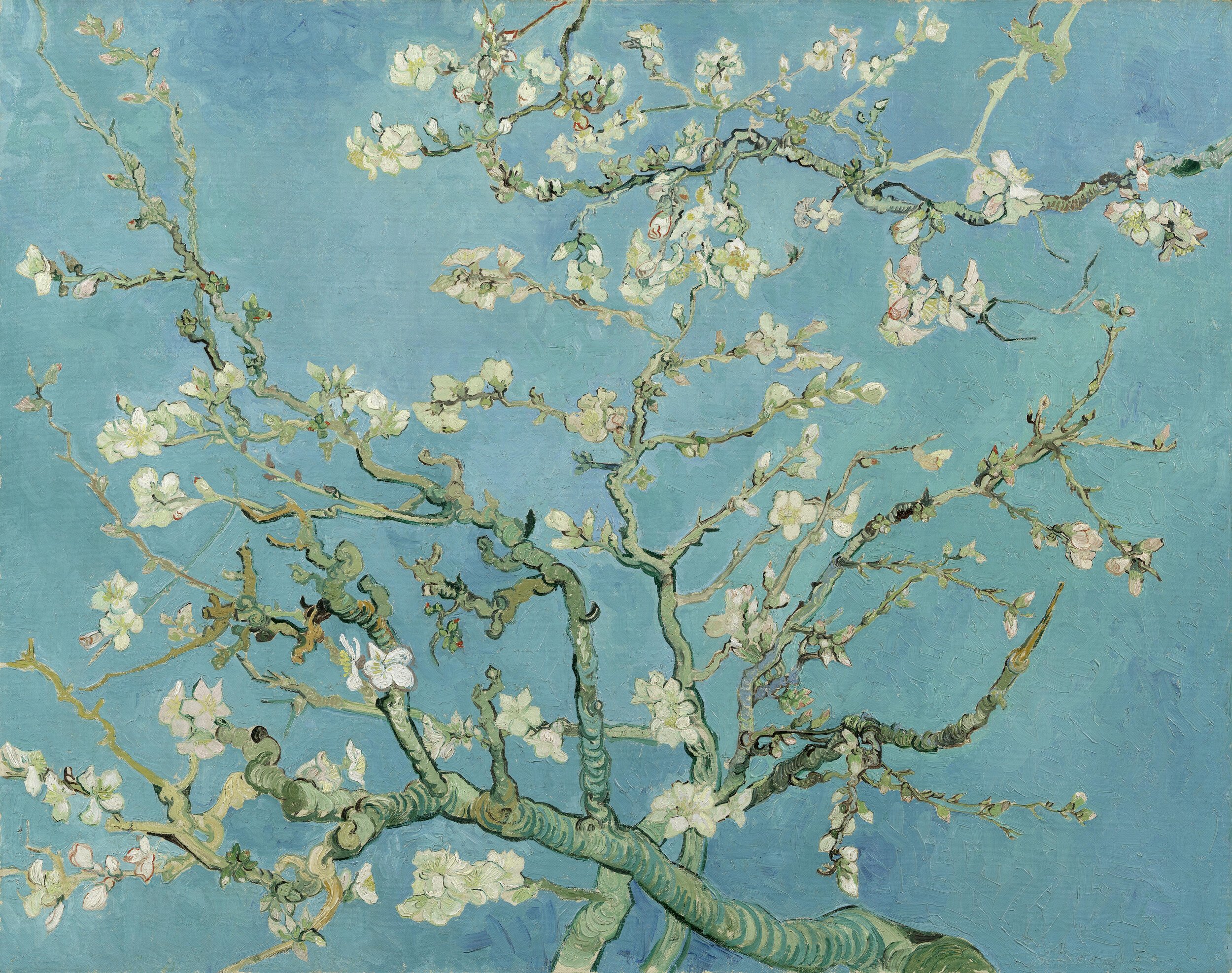
“Almond Blossom” — Vincent van Gogh
“Almond Blossom” presents flowering branches against a bright blue sky, reducing the image to blossoms, branches, and open color. The painting feels airy and celebratory, but also carefully structured, as the twisting branches spread across the picture plane like a pattern. By isolating the blossoms against pure sky, van Gogh turns a seasonal subject into something both intimate and monumental.
The composition has no ground line and almost no spatial depth in the conventional sense. Instead, branches extend cross the canvas in different directions, creating a network of white blossoms and dark lines against the blue field. This gives the painting a striking clarity. The blossoms seem suspended in light, while the bold outlines and cropped forms show van Gogh’s deep interest in Japanese print design.
Van Gogh painted this piece in 1890 as a gift for his newborn nephew, and the subject carried associations of new life and fresh beginning. Blossom branches had become one of his favorite motifs, especially because they allowed him to combine close observation of nature with simplified form, expressive line, and luminous color. That combination gives this painting its unusual sense of tenderness and strength.
Expressed on silk and paired with integrated illumination, the artwork takes on a different presence from traditional surfaces. The translucency of silk allows light to pass through the image, introducing a sense of depth and softness that changes with its surroundings. Rather than remaining a fixed image, the piece responds to light and its environment, shifting in presence throughout the day. Appearing quiet and refined in natural light, it becomes softly luminous as light grows more prominent.
“Almond Blossom” — Vincent van Gogh
“Almond Blossom” presents flowering branches against a bright blue sky, reducing the image to blossoms, branches, and open color. The painting feels airy and celebratory, but also carefully structured, as the twisting branches spread across the picture plane like a pattern. By isolating the blossoms against pure sky, van Gogh turns a seasonal subject into something both intimate and monumental.
The composition has no ground line and almost no spatial depth in the conventional sense. Instead, branches extend cross the canvas in different directions, creating a network of white blossoms and dark lines against the blue field. This gives the painting a striking clarity. The blossoms seem suspended in light, while the bold outlines and cropped forms show van Gogh’s deep interest in Japanese print design.
Van Gogh painted this piece in 1890 as a gift for his newborn nephew, and the subject carried associations of new life and fresh beginning. Blossom branches had become one of his favorite motifs, especially because they allowed him to combine close observation of nature with simplified form, expressive line, and luminous color. That combination gives this painting its unusual sense of tenderness and strength.
Expressed on silk and paired with integrated illumination, the artwork takes on a different presence from traditional surfaces. The translucency of silk allows light to pass through the image, introducing a sense of depth and softness that changes with its surroundings. Rather than remaining a fixed image, the piece responds to light and its environment, shifting in presence throughout the day. Appearing quiet and refined in natural light, it becomes softly luminous as light grows more prominent.